
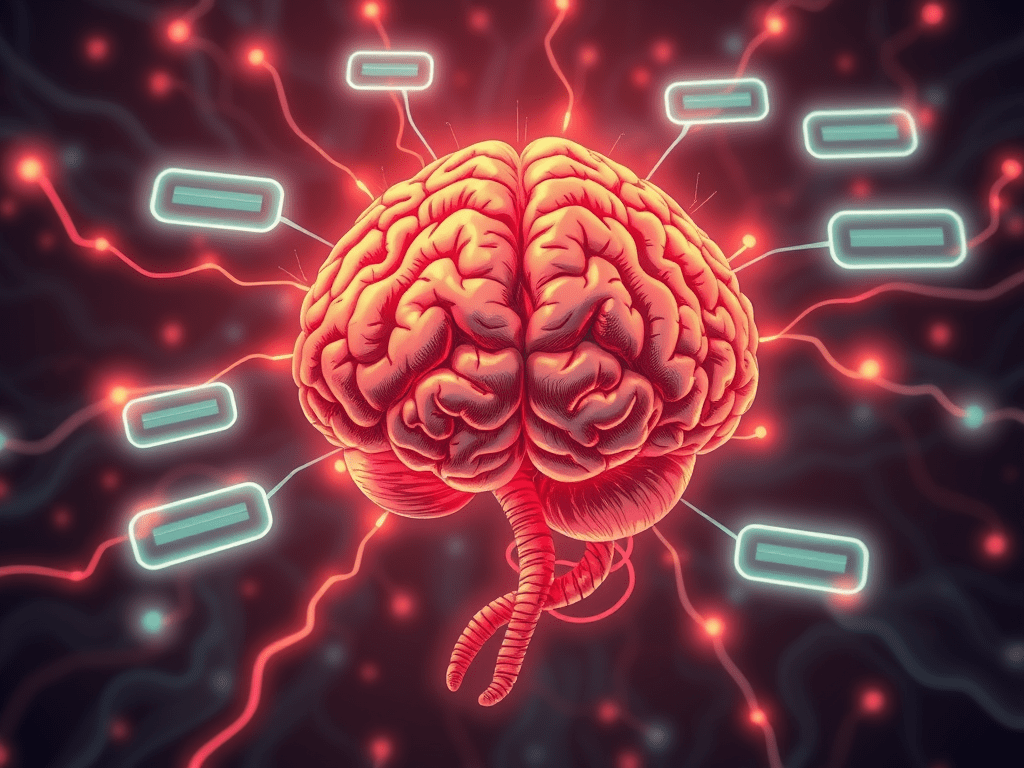

In just two hours, brain activity can reshape your gut’s microbial landscape, scientists find.
We’ve long known that the gut can influence the brain, affecting everything from mood to mental health. But new research shows the brain can also send signals back—rapidly reshaping the gut microbiome in just a couple of hours.
In a groundbreaking study, researchers at the August Pi i Sunyer Biomedical Research Institute in Spain used a technique called chemogenetics to activate specific neurons in the brains of mice. These neurons, located in the hypothalamus, are known to regulate hunger. After stimulating them, the team analyzed gut samples from different sections of the digestive tract just 2 and 4 hours later.
The results were striking: mice with activated neurons showed a dramatic increase in microbial diversity, especially in the duodenum—the first part of the small intestine. In fact, microbial diversity in this region was five times higher than in control mice.
The researchers didn’t stop there. They ran the experiment again, this time inhibiting the same neurons. This also caused major shifts in the gut microbiome, with some bacterial families nearly disappearing in certain parts of the intestine.
To further test the brain’s influence, the team injected appetite-regulating hormones directly into the brains of mice. Once again, they observed rapid and significant changes in gut bacteria—some populations surged, while others declined, depending on the gut region.
These findings, published in Nature Metabolism, suggest that the brain can swiftly and precisely modulate the gut microbiome. While the exact mechanisms remain unclear, lead researcher Marc Claret believes the brain may be signaling the gut to prepare for digestion when it detects food-related hormones.
Although this research was conducted in mice, the brain circuits involved in appetite and digestion are similar in humans. If confirmed in people, this discovery could reshape how we study the microbiome.
Christoph Thaiss, a microbiome researcher at Stanford University, says the implications are profound. “We may need to consider a person’s mental state when analyzing their gut microbes,” he notes. “And we should start thinking about microbiome changes on an hourly—not just daily—scale.”
This study also opens the door to new questions: Could other brain regions, like those involved in memory or emotion, also influence gut microbes? The gut-brain connection may be even more complex—and more powerful—than we ever imagined.
To read this paper yourself, follow this link: Nature Metabolism, doi.org/g9f9wf
 Science & Tea